
Why Leadership Development Is Necessary, But Not Sufficient
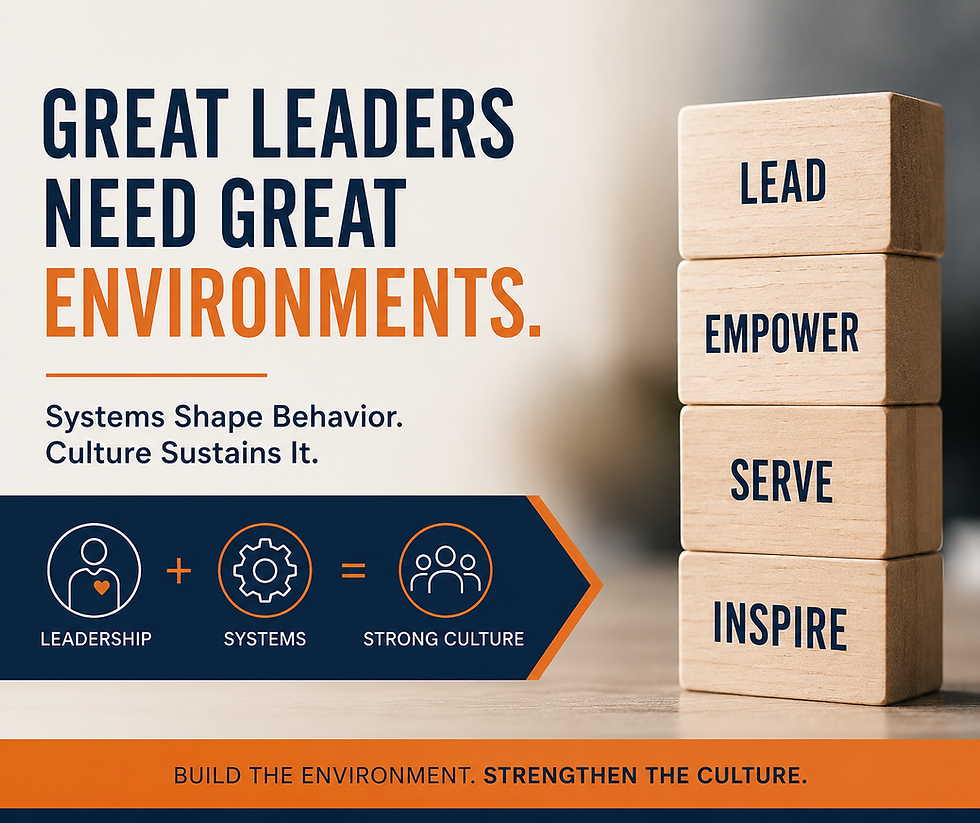
Organizations invest enormous amounts of time and money into leadership development. We train leaders on emotional intelligence, communication, difficult conversations, coaching, performance reviews, accountability, delegation, and conflict resolution.
And we should.
Leadership development matters because leadership behavior shapes the employee experience. Leaders influence engagement, trust, accountability, collaboration, and performance every single day. Organizations succeed because of people—not through people—and leaders play a critical role in creating environments where people can thrive.
But leadership training alone is not enough.
A leader can attend every workshop, read every book, and genuinely desire to lead well, yet still struggle to sustain healthy leadership behaviors if the surrounding organizational environment pushes against them.
This is one of the most overlooked realities in organizational life:
| Individual leadership development is necessary, but it is not sufficient.
In REALationship Driven Cultures, I argue that culture is an outcome. We do not improve culture directly. We improve the environment that shapes behaviors. That includes leadership behavior.
If organizations want servant leadership, collaboration, accountability, empowerment, and healthy relationships to become “the way we operate,” the organizational systems must reinforce those behaviors consistently.
Otherwise, the culture eventually overwhelms the leader.
Why Servant Leadership Doesn’t Happen Automatically
Many organizations say they want servant leaders. They want leaders who empower employees, collaborate across teams, invest in people, and prioritize the greater good.
However, wanting servant leadership and building an environment that sustains it are two very different things.
Some leaders naturally lean toward servant leadership more than others. Personality, upbringing, personal values, emotional intelligence, and prior experiences all influence how leaders show up. However, even leaders with strong intentions operate inside systems. And systems shape behavior.
What Gets in the Way
1. The Pressure to Advance
Many organizations unintentionally reward self-serving behavior. Leaders quickly learn what truly gets promoted, recognized, and rewarded. If promotions primarily go to people who protect themselves, maximize short-term results, avoid risk, or compete internally, employees notice. Leaders notice too. Over time, even well-intentioned leaders begin adapting to the system around them.
2. Organizational Culture
Culture teaches employees what behaviors are safe, expected, and rewarded. If you do not want to send mixed messages:
You can’t tell leaders to collaborate while rewarding territorial behavior.
You can’t preach empowerment while punishing mistakes.
You can’t encourage servant leadership while promoting leaders who burn people out.
People pay far more attention to what organizations reinforce than what they say.
As I often say:
Employees watch what leaders and organizations tolerate far more closely than they listen to mission statements and values.
3. Human Survival Instincts
Humans naturally protect themselves under stress. When environments feel political, unclear, inconsistent, or unsafe, people become more defensive and self-focused. Relationship issues create stress, and stress changes behavior. When employees feel disconnected or threatened, collaboration decreases and self-preservation increases. Without intentional systems supporting healthy leadership, servant leadership can slowly erode under organizational pressure.
The Organizational Role: Systems Matter
One of the biggest leadership mistakes organizations make is assuming that if we train leaders, they will consistently behave the right way regardless of the environment around them.
That rarely works long term.
Organizations often rely too heavily on individuals to self-police behavior while underinvesting in the systems that shape and reinforce those behaviors.
| Even strong leaders eventually adapt to the environment around them.
Systems communicate culture every day.
performance management processes
succession planning processes
compensation approaches
promotion criteria
onboarding experiences
accountability systems
meeting structures
recognition practices
They all teach employees what truly matters. If those systems are misaligned, they create mixed messages.
Why a Formal, Systematic Approach Matters
Healthy leadership behavior becomes sustainable when organizations intentionally build systems that reinforce it consistently.
It starts with clarity.
Organizations need a clear definition of:
what leadership looks like
what behaviors matter
what the organization truly values
how employees are expected to treat one another
Clarity alone is not enough. The systems must support the direction and strategy.
Alignment Creates Credibility
Inconsistent systems create cynicism.
For example:
If collaboration is valued, but performance reviews only measure individual achievement, the message is inconsistent.
If empowerment is encouraged, but leaders are punished when employees make mistakes, empowerment disappears.
If servant leadership is expected, but promotions favor political behavior, leaders adapt accordingly.
This is why talent systems must work together instead of operating independently. Performance management, leadership development, succession planning, compensation, coaching, accountability, and recognition should all reinforce the same behavioral expectations.
When systems align, healthy leadership becomes easier to sustain.
You Can Measure Leadership Differently
One common misconception is that servant leadership weakens accountability or performance.
The opposite is true.
Healthy cultures drive greater results. Strong relationships allow productive disagreement, stronger accountability, and increased willingness to challenge each other effectively.
Organizations can evaluate leadership based on:
collaboration
quality of relationships
development of others
cross-functional support
trust building
engagement
accountability
contribution to the greater good
These behaviors are measurable. And when organizations intentionally reinforce them, they become cultural norms instead of isolated exceptions.
Culture Either Happens to You or Because of You
Every organization has a culture. The question is whether it formed intentionally or accidentally. It is important to proactively shape environments rather than reacting once dysfunction appears.
Strong cultures do not happen randomly.
They emerge when organizations intentionally create alignment around:
expectations
relationships
systems
If organizations fail to do this, employees simply adapt to whatever behaviors help them survive inside the environment.
How Organizations Create Leadership Systems That Work
The process begins with a clear talent strategy.
Organizations must honestly define:
What kind of environment are we trying to create?
What leadership behaviors matter most?
What are we truly willing to reinforce?
What are we unwilling to tolerate?
In many cases, clarity itself is the missing ingredient.
Taking the time to create, document, and communicate a clear talent strategy creates alignment, consistency, and fairness.
Although I am a big believer in collaboration, if you are not going to purposefully work to have strategic involvement, don’t say you will. It is far better for an organization to admit, “Collaboration is not currently part of how we operate,” than to claim collaboration as a value while building systems that discourage it.
Once the strategy is clear, organizations must intentionally design talent systems that reinforce one another.
In REALationship Driven Cultures, I outline four Environmental Elements that help shape healthy organizational behavior:
Mindsets
Shared expectations for how employees treat one another.
Purpose
Alignment around meaningful work and shared direction.
Involvement
Creating environments where employees participate, contribute, and feel ownership.
Service
Focusing on the greater good instead of self-serving behavior.
These elements create the relational environment that supports healthy leadership behavior over time.
Final Thought
Leadership development matters deeply. Organizations need skilled leaders who can coach, communicate, empower, and build trust. But if the environment punishes healthy leadership behavior, even strong leaders will struggle to sustain it.
That is why leadership development must be paired with intentional systems, aligned talent strategies, and environments that reinforce the behaviors organizations truly want. Because culture is not created by training alone. It is created by the systems, relationships, and environments people experience every day.
And when those systems consistently reinforce healthy leadership, servant leadership stops being dependent on exceptional individuals and starts becoming part of the culture itself.

Comments