
What Is Organizational Culture? And Why the Best Cultures Start With Relationships

I have been getting this question a lot lately: “What exactly is organizational culture?”
My answer always begins with a simple truth: culture is not what you say you value; it’s what your environment consistently produces.
And the stakes are high. Disconnected workers have 37% higher absenteeism and are 18% less productive. Dissatisfied employees cost U.S. businesses an estimated $450–550 billion every year in turnover, low motivation, and reduced effort.
So, when we talk about organizational culture, we’re not talking about something warm and fuzzy. We’re talking about operational performance, engagement, retention, and business outcomes.
What Is Organizational Culture? Definitions From Leading Experts
Edgar Schein
Culture is “a pattern of shared basic assumptions” that guides how people behave, think, and feel within an organization.
Simon Sinek
“Culture is not what you say. It’s the environment you create.”
Patrick Lencioni
Culture is “the behaviors and norms that define how people work together.”
Across every definition, one idea repeats: Organizational Culture is revealed through behavior.
My Perspective: Culture Is an Outcome, Not an Initiative
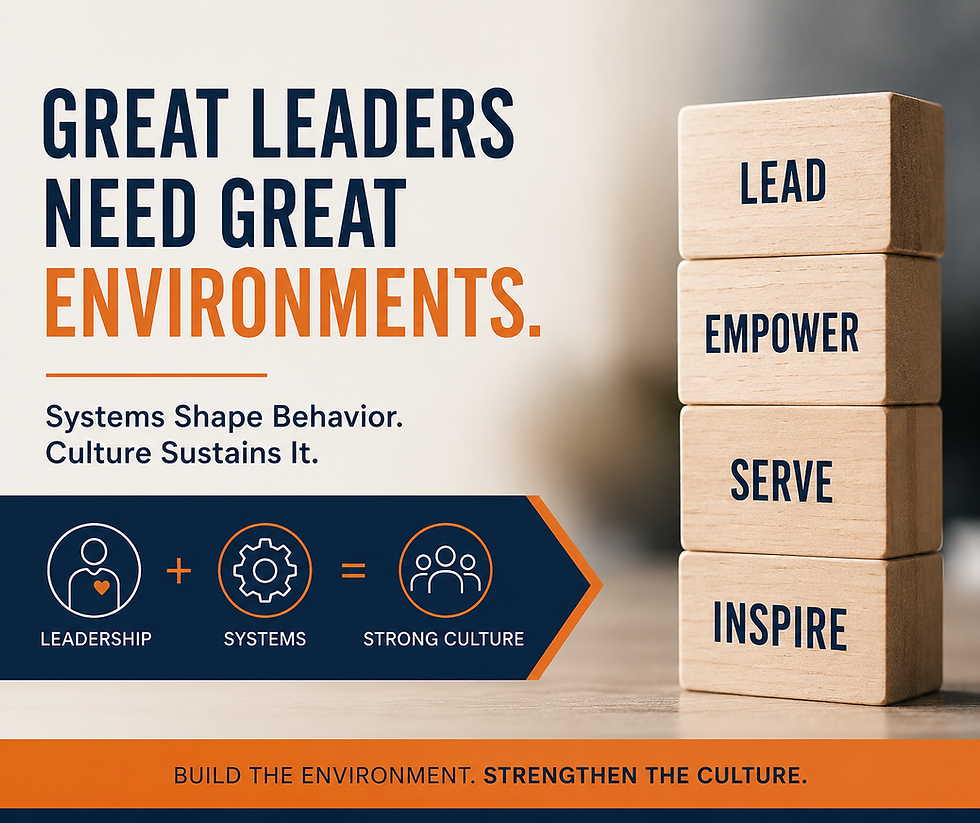
In REALationship Driven Cultures, I share a different perspective: Organizational Culture is an outcome. You don’t work on culture directly; you work on the environment that shapes behavior.
At its core, that environment should be relational.
Strong relationships increase trust, reduce stress, and make communication easier.
Weak relationships slow down work, increase conflict, and drain energy.
Thriving relationships create engagement, clarity, and higher performance.
In my experience, almost every workplace performance issue is rooted in a relational issue. When relationships thrive, teams solve problems faster and with more unity. When relationships struggle, everything else struggles.
The Four Environmental Elements of a REALationship Driven Culture
You shape culture by shaping the environment people experience each day. My model includes four Environmental Elements that work together to influence behavior and create a healthy culture.
1. Mindsets — How We Treat Each Other
Mindsets set expectations for behavior. Shared expectations create safety, reduce friction, and make interactions predictable and respectful.
2. Purpose — Why We Work Together
Purpose aligns decisions and actions. When everyone understands the “why,” it reduces confusion and gives meaning to the work.
3. Collaboration — How We Work Together
Collaboration shapes how people communicate, share information, solve problems, and participate in running the business. True collaboration builds connection and reduces unnecessary conflict.
4. Service — How We Win Together
Service focuses on the greater good—team, function, and company. Service shifts behavior from self-serving to collective success, strengthening trust and unity.
Together, these elements create the environment that produces your culture.

It All Starts With One Belief: Relationships Matter Most
Everything in a REALationship Driven Culture begins with a simple belief:
Relationships aren’t a soft part of work—they are the work.
And the data backs this up:
Social isolation increases the risk of dementia by 50%, heart disease by 29%, and stroke by 32%.
Loneliness has the same impact on mortality as smoking.
Strong relationships improve resilience, reduce stress, and increase overall well-being.
High-trust workplaces see 50% higher productivity and stronger retention.
Employees with positive work relationships report significantly higher job satisfaction and engagement.
If relationships shape human health this profoundly, imagine their impact on organizational performance.
Three Outcomes: Unity, Self-Worth, and Resilience
When organizations intentionally build environments where strong relationships thrive, three outcomes emerge:
Unity
Unity creates alignment, reduces friction, and helps people move together with purpose.
Self-Worth
Self-worth grows when people feel valued and know their contributions matter. Employees with high self-worth bring more energy, creativity, and ownership to their work.
Resilience
Resilience develops in environments where people feel supported. Strong relationships help people navigate stress, adapt to change, and recover faster from setbacks.
Final Thought
If we want better organizational cultures, we must stop treating culture as a program and start treating it as the result of the environment we create. And the best environments, the most productive, the most human, the most successful, are the ones where strong, positive relationships thrive.
A REALationship Driven Culture is not a nice-to-have. It's the foundation of organizational health, human well-being, and long-term success.

Comments